
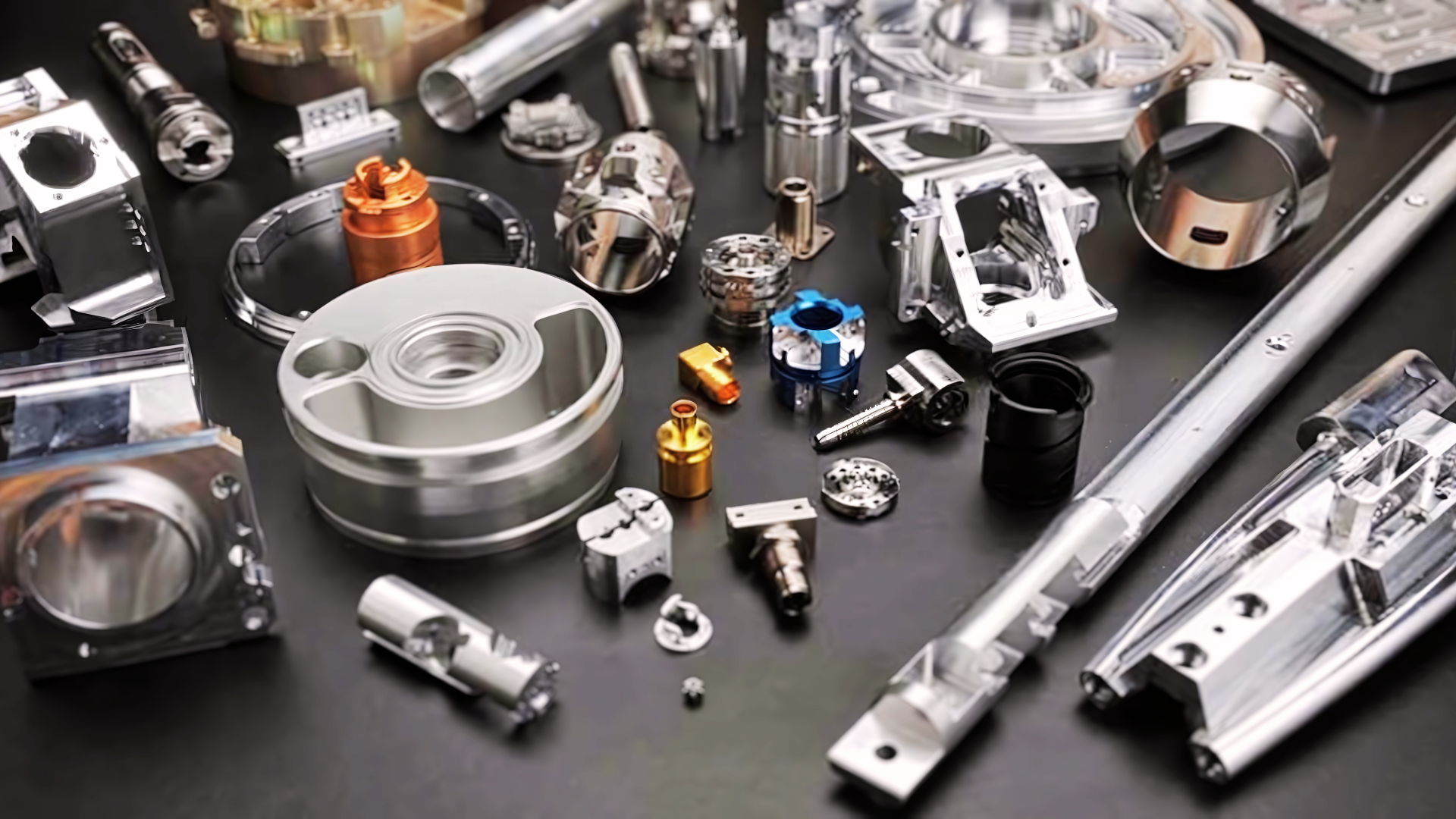
CNC Machining Material Selection Guide
Material selection in CNC machining is where precision meets purpose. Every project’s success hinges on these decisions—whether it’s about achieving the perfect balance of strength and flexibility or ensuring stability in extreme conditions. This guide dives deep into the critical factors of material selection, unraveling the complexities to help you make choices that elevate performance, maximize cost-efficiency, and reinforce sustainability. In a world where every detail matters, this is your roadmap to mastering the art of choosing the right materials, every time.
1. Understanding Core Material Properties
The integrity and success of the project hinge on the consideration of material properties.
Mechanical Properties: Material properties like tensile strength, hardness, and machinability significantly impact the success of CNC machining projects. For instance:
- Stainless Steel 304 is favored for its high tensile strength, making it ideal for durable parts in harsh environments, such as aerospace components.
- Aluminum 6061 balances strength and machinability, offering versatility in applications ranging from automotive to consumer goods.
Material Properties Comparison
- This table compares materials based on three key mechanical properties:Tensile Strength (MPa): Indicates the maximum stress a material can endure when stretched before breaking. Higher values signify stronger materials.Hardness (Rockwell): Measures a material's resistance to permanent deformation or indentation. A higher Rockwell number denotes greater hardness, important for wear-resistant applications.Density (g/cm³): Represents the mass per unit volume. Lower density materials are lighter.Thermal Properties: Precision components often require materials with low thermal expansion, such as Invar, commonly used in aerospace applications where dimensional stability is critical across temperature variations. Meanwhile, materials like Copperare selected for heat sinks in electronics due to their superior heat dissipation, preventing thermal damage to sensitive components.Match material properties to your project's demands. The right alignment can be the difference between meeting expectations and exceeding them.Pro Tip: Choose Stainless steel 316 for medical devices—its tensile strength, corrosion resistance, and sterilization compatibility, it ensures durability and unwavering reliability in critical healthcare settings.
| Material | Tensile Strength (MPa) | Hardness (Rockwell) | Density (g/cm³) | Applications |
|---|---|---|---|---|
| Aluminum 6061 | 310 | 95 (B) | 2.70 | Aerospace, Automotive, Consumer Goods |
| Stainless Steel 304 | 505 | 70 (B) | 8.00 | Medical Devices, Food Processing |
| Titanium Grade 5 | 900 | 41 (C) | 4.43 | Aerospace, Medical Implants |
| Invar | 448 | 40 (C) | 8.10 | Precision Instruments, Aerospace Applications |
| Inconel 718 | 1250 | 40 (C) | 8.19 | Aerospace, High-Temperature Applications |
| Brass C36000 | 345 | 55 (B) | 8.44 | Decorative Hardware, Precision Components |
| Copper | 210 | 40 (B) | 8.96 | Electrical, Mechanical, Telecommunications |
| Carbon Steel 1045 | 570 | 70 (B) | 7.85 | Machinery Parts, Tools, General Manufacturing |
| Magnesium AZ31B | 280 | 60 (B) | 1.78 | Aerospace, Automotive, Consumer Electronics |
| Tool Steel D2 | 775 | 60 (C) | 7.70 | Dies, Cutting Tools, Wear-Resistant Components |
| Polycarbonate (PC) | 70 | — | 1.20 | Electronic Enclosures, Optical Components |
| PEEK | 100 | — | 1.35 | Medical Implants, Aerospace, Chemical Processing |
2. Machinability
The right material choice can streamline your production process.
Key Factors Affecting Machinability: Machinability is crucial for determining the efficiency and quality of CNC machining processes. For example:Material Hardness: Harder materials likeInconel 718 are challenging to machine due to rapid tool wear and the need for precise cutting conditions. However, its strength in high-temperature environments makes it indispensable for specific aerospace applications.
- Thermal Conductivity: Aluminum 6061’s high thermal conductivity allows for faster machining speeds without compromising surface quality, making it ideal for applications where both time and finish are critical.
- Surface Finish: Achieving a superior surface finish is easier with Brass C36000, often used in decorative hardware and precision components where aesthetics and accuracy are paramount.
Material Machinability Comparison
This table represents the machinability of various materials by assessing their performance in CNC machining processes.
Machinability: This is a qualitative measure of how easily a material can be machined. It factors in cutting speed, tool life, and the quality of the finished surface. Ratings are as follows:
- Excellent: Material can be machined quickly with minimal tool wear and produces a high-quality finish.
- Good: Material is generally easy to machine with reasonable tool life and surface finish.
- Moderate: Material poses some challenges in machining, requiring careful selection of tools and cutting conditions.
- Poor: Material is difficult to machine, often resulting in significant tool wear and challenges in achieving a good surface finish. Choose materials that enhance your workflow. Better machinability means fewer headaches, faster production, and lower costs. Pro Tip: Use Aluminum 6061 in high-volume production—its machinability cuts machining time by up to 20%, speeding up market delivery without sacrificing quality.
| Material | Machinability |
|---|---|
| Aluminum 6061 | Excellent |
| Stainless Steel 304 | Moderate |
| Titanium Grade 5 | Poor |
| Invar | Poor |
| Inconel 718 | Poor |
| Brass C36000 | Excellent |
| Copper | Good |
| Carbon Steel 1045 | Moderate |
| Magnesium AZ31B | Excellent |
| Tool Steel D2 | Poor |
| Polycarbonate (PC) | Good |
| PEEK | Moderate |
3. Material Form & Availability
The form of your materials—whether stock or custom—has a direct impact on cost and efficiency.
Selecting the Right Material Form: Choosing between stock forms (sheets, rods, billets) and custom forms (forgings, castings) can significantly impact cost-efficiency and waste. Stock forms are cost-effective and readily available, making them ideal for straightforward designs. However, custom forms, particularly near-net shapes, reduce both material waste and machining time, which is crucial in high-volume production. j7u
Cost vs. Availability of Material Forms
This table helps compare the cost and availability of materials in both stock and custom forms, which is crucial for project planning and budgeting.
- Stock Form Cost: Indicates the cost of the material when purchased in standard forms (e.g., sheets, rods). Lower costs typically reflect more readily available materials that are easier to source.
- Custom Form Cost: This reflects the cost of materials that need to be specially processed or shaped (e.g., forgings, castings). Custom forms usually have a higher cost due to additional processing.
- Lead Time: Refers to the time required to procure the material in either stock or custom forms. Short lead times are preferable for projects with tight deadlines, while longer lead times might necessitate more careful project planning.
Weigh the benefits of custom forms. Sometimes, investing a little more upfront can lead to significant savings down the line.
Pro Tip: Transition to Aluminum Alloy Forgings in aerospace manufacturing. Cut costs by 30%, boost production speed by 15%, giving you a clear competitive edge.
| Material | Stock Form Cost | Custom Form Cost | Lead Time |
|---|---|---|---|
| Aluminum 6061 | Low | Medium | Short |
| Stainless Steel 304 | Medium | High | Medium |
| Titanium Grade 5 | High | Very High | Long |
| Invar | High | Very High | Long |
| Inconel 718 | Very High | Very High | Long |
| Copper | Medium | High | Medium |
| Brass C36000 | Low | Medium | Short |
| Carbon Steel 1045 | Medium | High | Medium |
| Magnesium AZ31B | Medium | High | Medium |
| Tool Steel D2 | Medium | High | Medium |
| Polycarbonate (PC) | Medium | High | Short |
| PEEK | Very High | Very High | Long |
| ABS | Low | Medium | Short |
4. Thermal & Environmental Considerations
Temperature variability can compromise material stability.
Thermal Challenges in CNC Machining: Materials like Invar are selected for aerospace and high-precision applications due to their low thermal expansion, ensuring dimensional accuracy even under extreme temperature fluctuations. Aluminum and Copper are commonly used in electronic components for their excellent heat dissipation properties, which protect sensitive electronics from overheating.
Thermal Properties Comparison
This table compares materials based on thermal properties, crucial for temperature-sensitive applications.
- Thermal Expansion (µm/m-°C): Indicates how much a material expands or contracts with temperature changes. Lower values provide better dimensional stability, important in precision instruments and aerospace.
- Thermal Conductivity (W/m-K): Measures how well a material conducts heat. High conductivity is key for heat dissipation in electronics, while low conductivity is preferred for insulation. Opt for materials that stay true to form based on their applications, regardless of the thermal environment. Consistency here is key to reliability in critical applications.
| Material | Thermal Expansion (µm/m-°C) | Thermal Conductivity (W/m-K) |
|---|---|---|
| Invar | 1.2 | 13 |
| Aluminum 6061 | 23.6 | 167 |
| Stainless Steel 304 | 17.2 | 16 |
| Titanium Grade 5 | 8.6 | 6.7 |
| Inconel 718 | 13.0 | 11.4 |
| Brass C36000 | 19.0 | 120 |
| Copper | 16.5 | 385 |
| Carbon Steel 1045 | 11.1 | 50.2 |
| Magnesium AZ31B | 26.0 | 96 |
| Tool Steel D2 | 11.0 | 20 |
| Polycarbonate (PC) | 65.0 | 0.19 |
| PEEK | 47.0 | 0.25 |
5. Cost Efficiency & Lead Time
Cost and lead time are pivotal in project management.
Optimizing Cost and Lead Time: The cost and lead time of materials are critical factors in project success. Materials like Inconel 718 are expensive but necessary for high-performance applications, such as those requiring resistance to extreme temperatures. Conversely, high-machinability materials like Brass C36000 and Aluminum 6061 reduce machining time, lower tool wear, and lead to faster production cycles, ultimately enhancing ROI.
ROI Analysis of CNC Materials
This table compares materials based on cost, machining time, and overall ROI to help users choose the most cost-effective and efficient options.
- Initial Cost: The upfront expense of the material. Lower costs can boost ROI, especially in large-scale production.
- Machining Time: The duration needed to machine the material. Shorter times reduce labor and machine costs, enhancing ROI.
- Total ROI: A qualitative measure of cost-effectiveness, considering material cost, machining time, tool wear, and final product performance. Higher ROI indicates better investment value Choose materials that align with your financial goals. Speed, efficiency, and cost control start with smart material selection. Pro Tip: Switch from Stainless Steel to Brass in high-volume production. Save 25% on costs without sacrificing quality—smart, efficient, effective.
| Material | Initial Cost | Machining Time | Total ROI |
|---|---|---|---|
| Aluminum 6061 | Low | Short | High |
| Stainless Steel 304 | Medium | Moderate | Medium |
| Titanium Grade 5 | High | Long | Medium |
| Invar | Very High | Long | Low |
| Inconel 718 | Very High | Long | Low |
| Brass C36000 | Low | Short | High |
| Copper | Medium | Moderate | High |
| Carbon Steel 1045 | Medium | Moderate | High |
| Magnesium AZ31B | Medium | Short | High |
| Tool Steel D2 | Medium | Long | Medium |
| Polycarbonate (PC) | Low | Short | High |
| PEEK | Very High | Long | Medium |
6. Sustainability & Environmental Impact
Sustainability is a key consideration in responsible and modern manufacturing.
Sustainability in CNC Machining: Materials like Aluminum and Steel are highly recyclable, reducing environmental impact and aligning with sustainable manufacturing practices. Choosing easily machinable materials like Aluminum also decreases energy consumption during production, further contributing to sustainability goals.
Environmental Insight: Usingrecycled Aluminum in CNC machining can significantly reduce both material costs and environmental impact. The choice of recycled materials supports a circular economy by minimizing waste and reducing the carbon footprint associated with material extraction and processing.
Consider the entire lifecycle of the material, from production to end-of-life. Using recycled materials or materials that comply with environmental regulations**(such as RoHS)** can help meet sustainability goals without compromising performance.
Integrate recyclable materials into your production process. It’s a move that pays off in more ways than one, supporting both your bottom line and the planet.
Conclusion
With the right choices, you can achieve the perfect balance of performance, efficiency, and sustainability. Use this guide as your blueprint for success, connect with our team and take the next step in ensuring your projects achieve their full potential.
- precision machining
- cnc machining
- materials
More from the journal.
Have a part that has to perform?
Send your 2D and 3D files. Our engineers review them for manufacturability and get back to you.